Dragon Jamz HGB6 Chord Family Quick Finder
Click a chord family to view the HGB6 chord chart.
Major Family | Minor Family | Dominant Family | Diminished Family
Major Family
Foundational major sounds for standards, funk, pop, chord melody, and general comping.
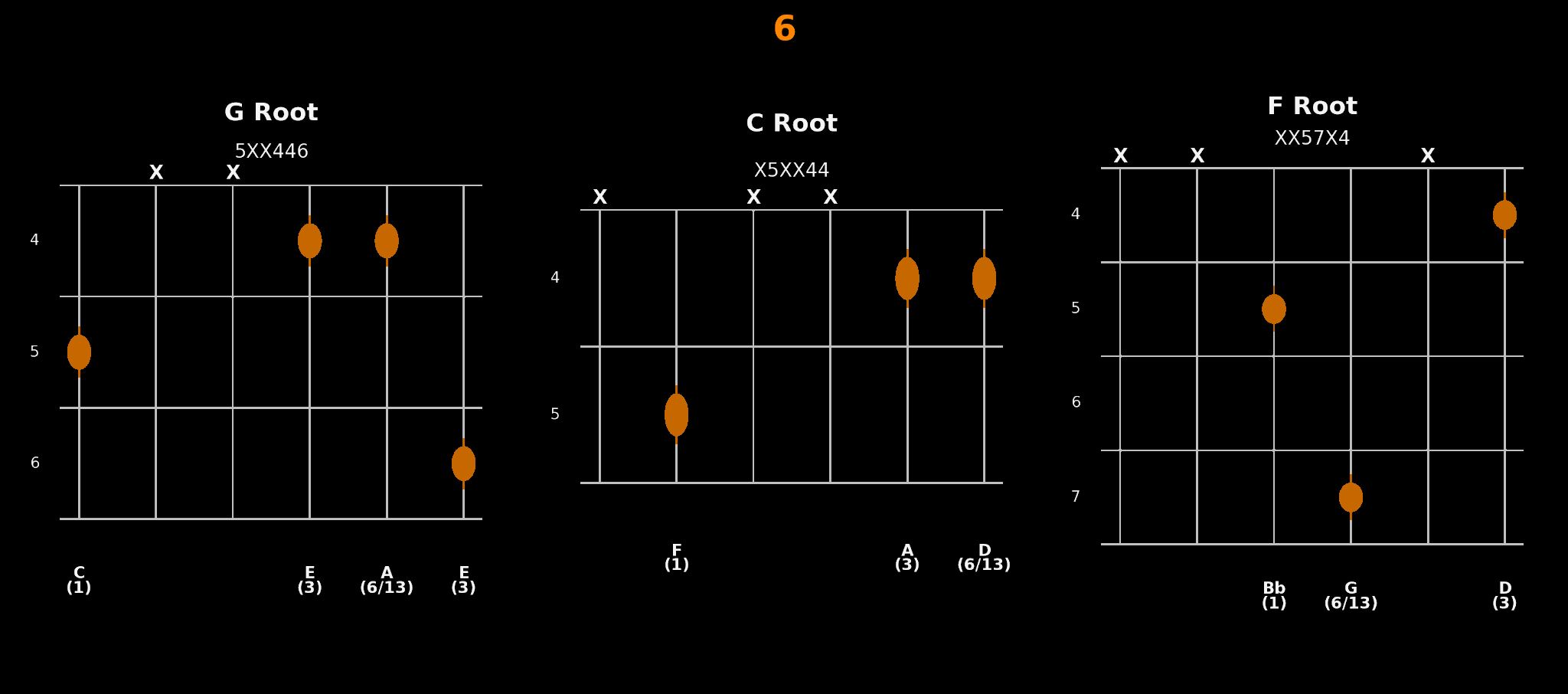
Major
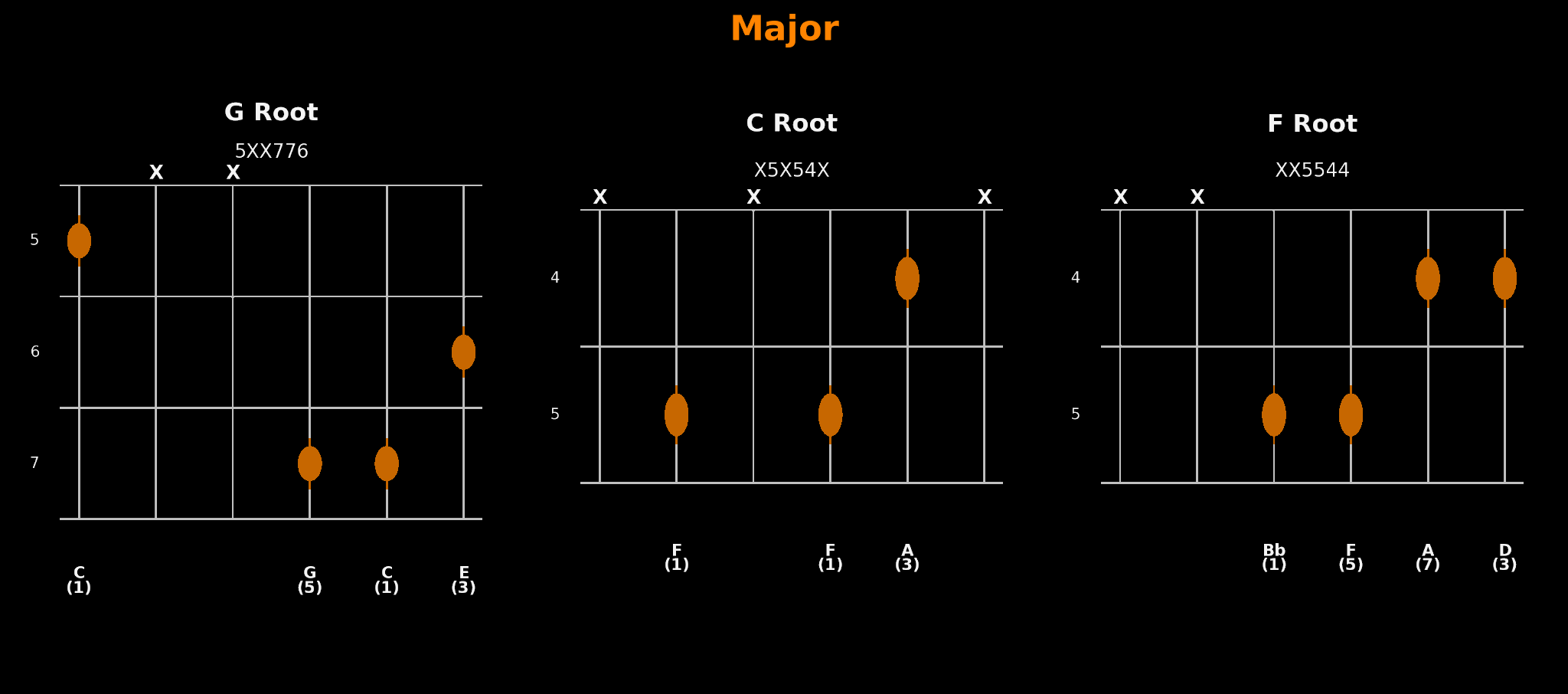
Major 7
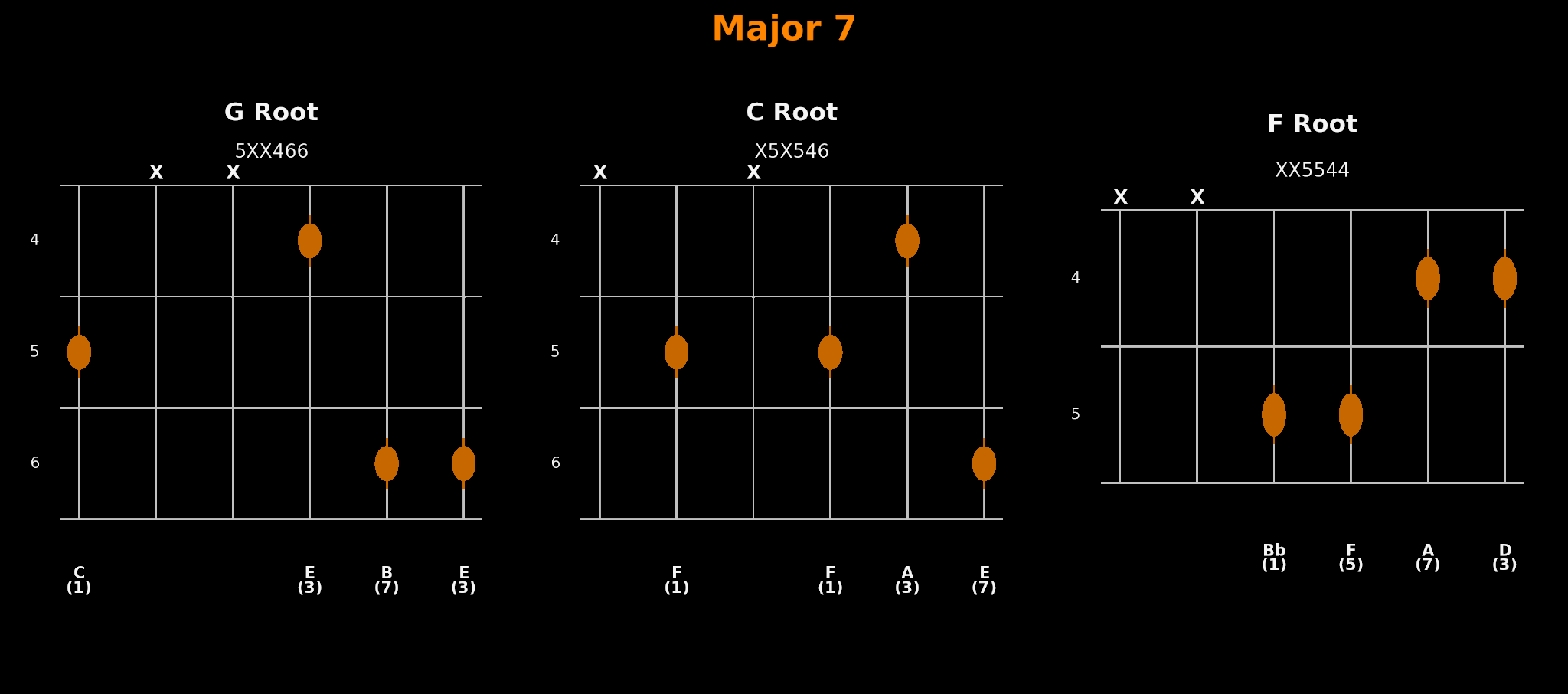
6
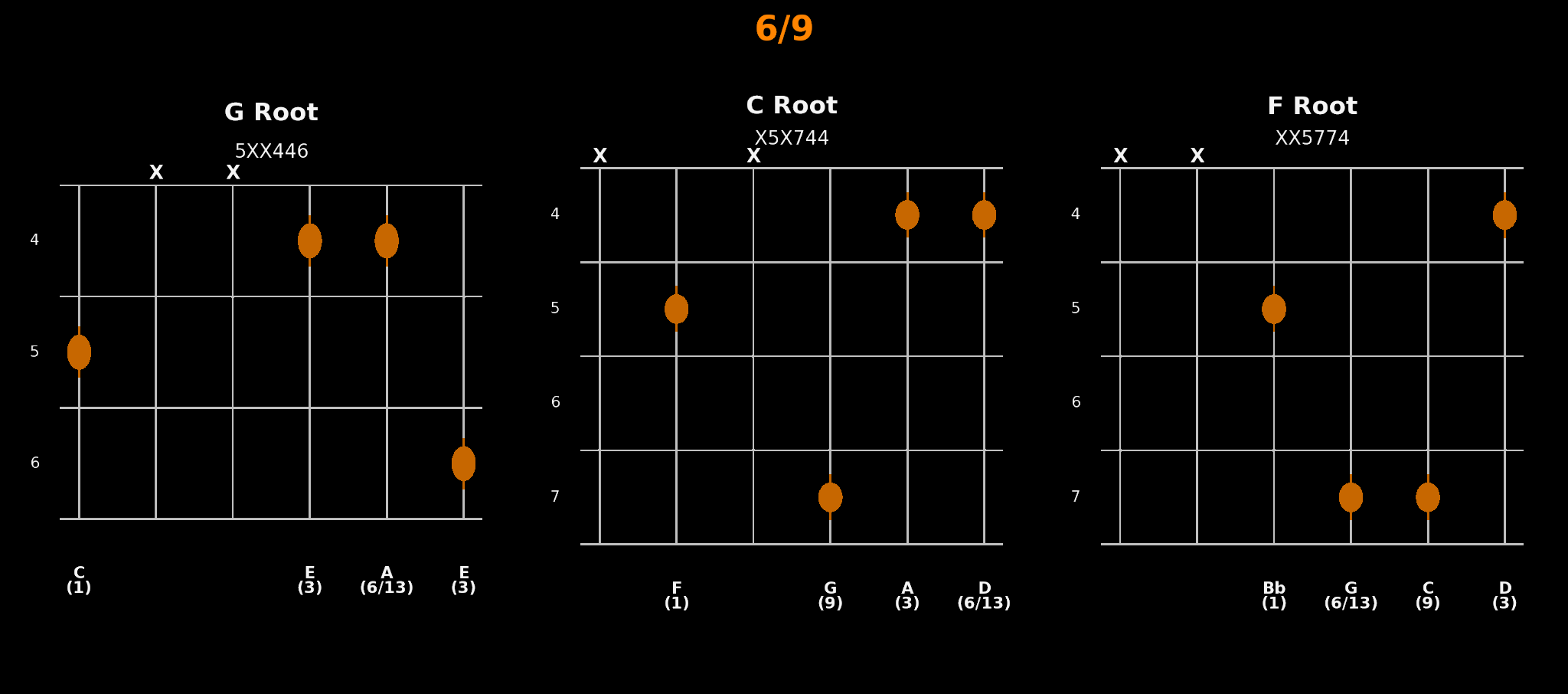
6/9
Minor Family
Minor harmony shapes used for ii chords, modal sounds, blues, funk, and contemporary grooves.
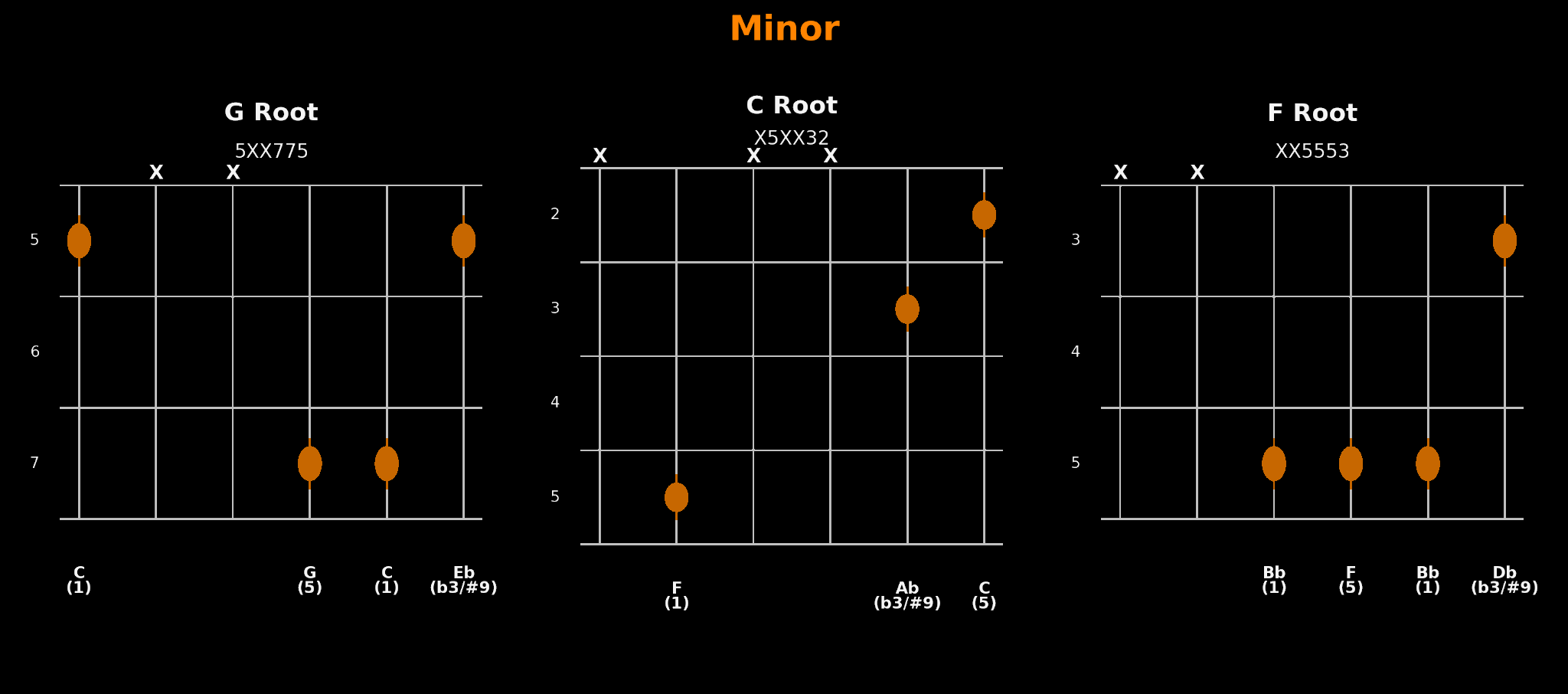
Minor
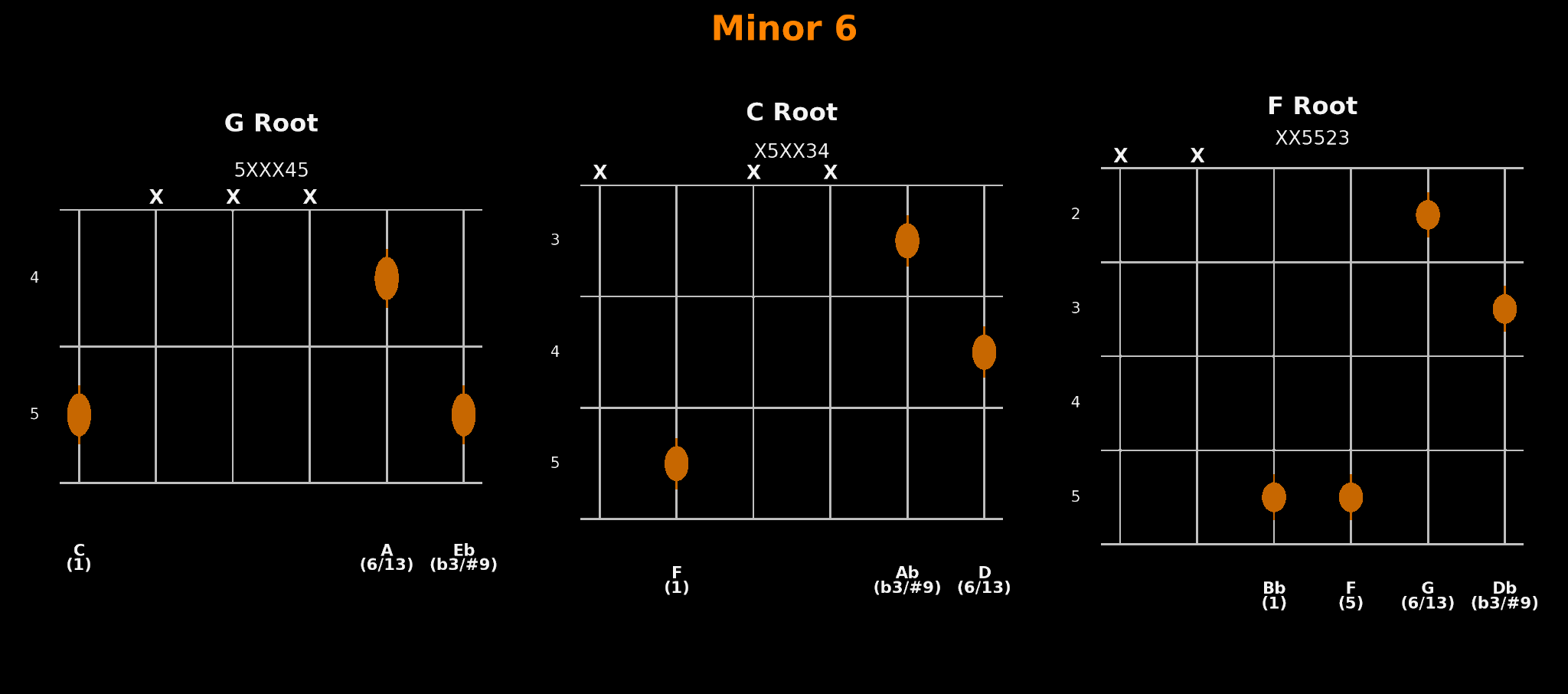
Minor 6
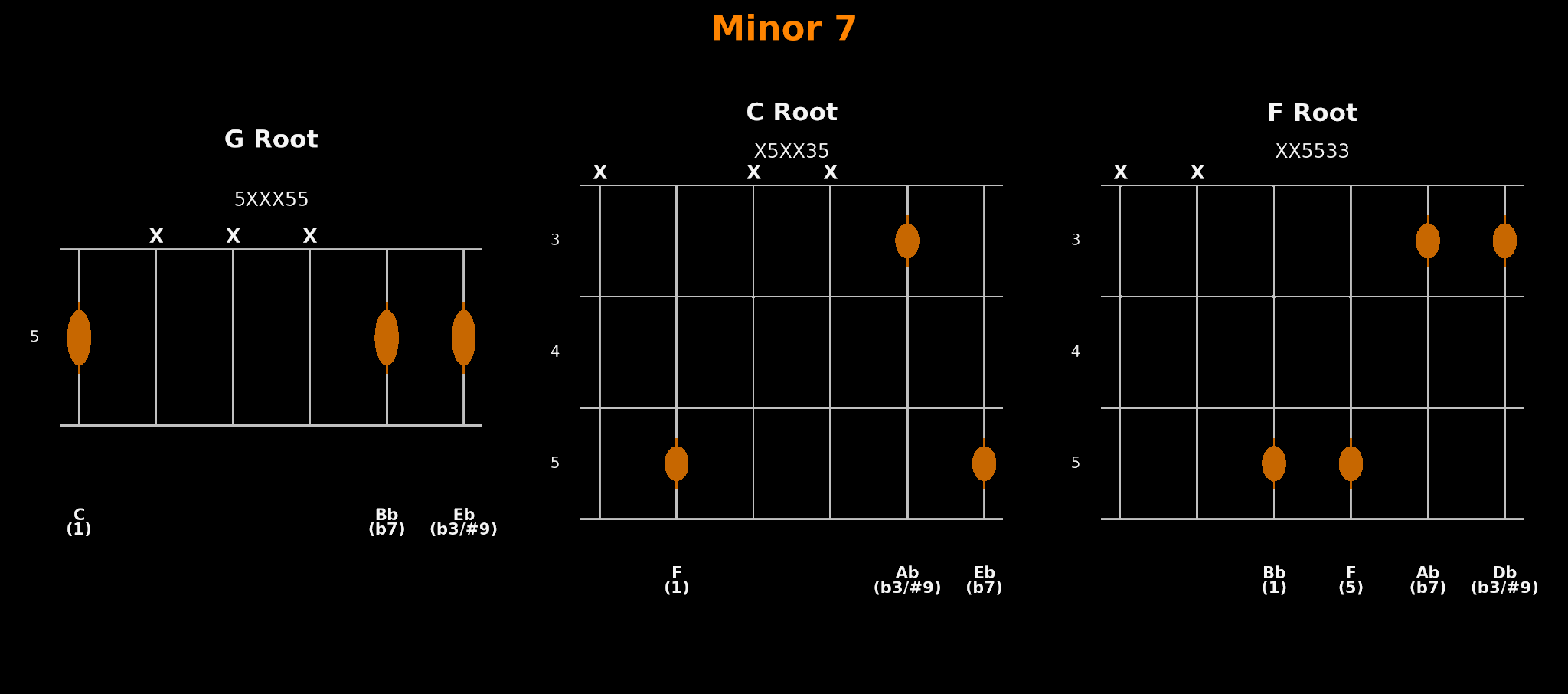
Minor 7
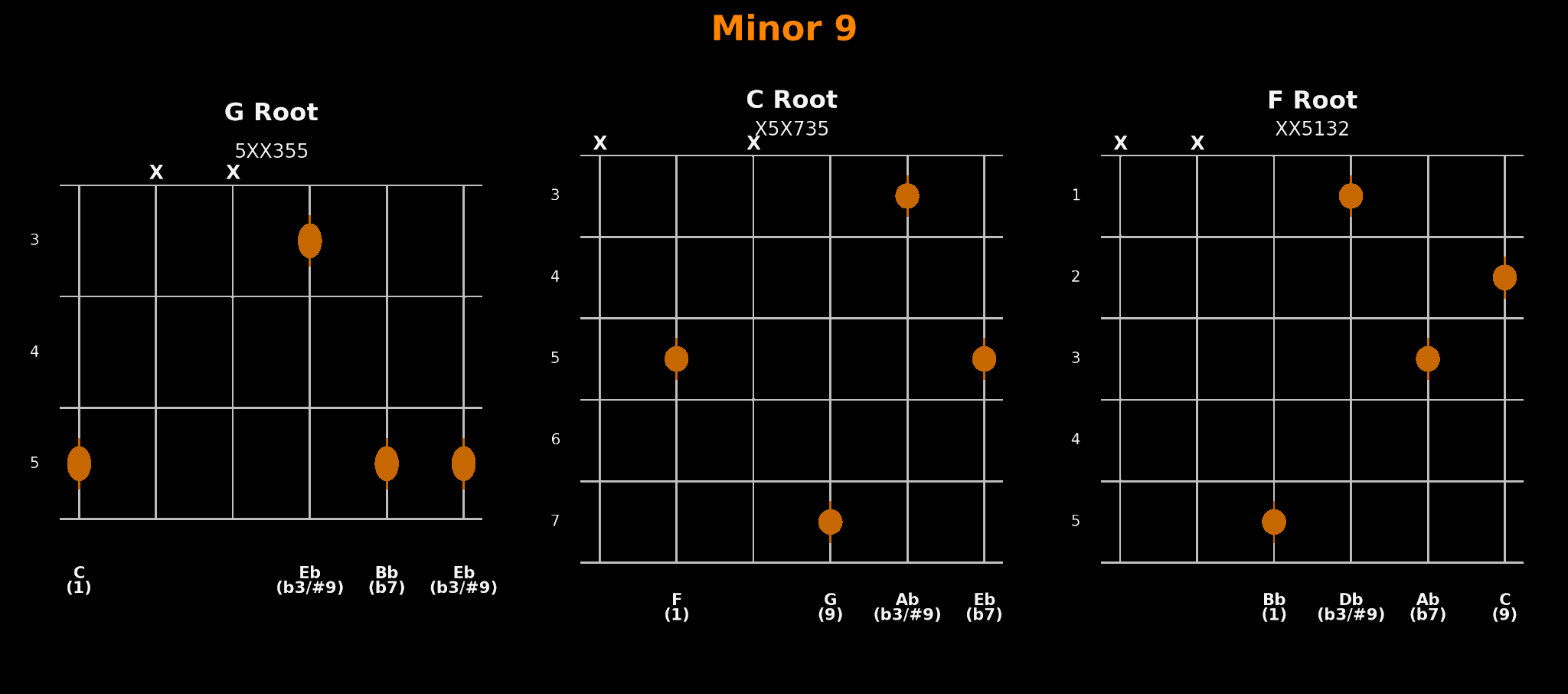
Minor 9
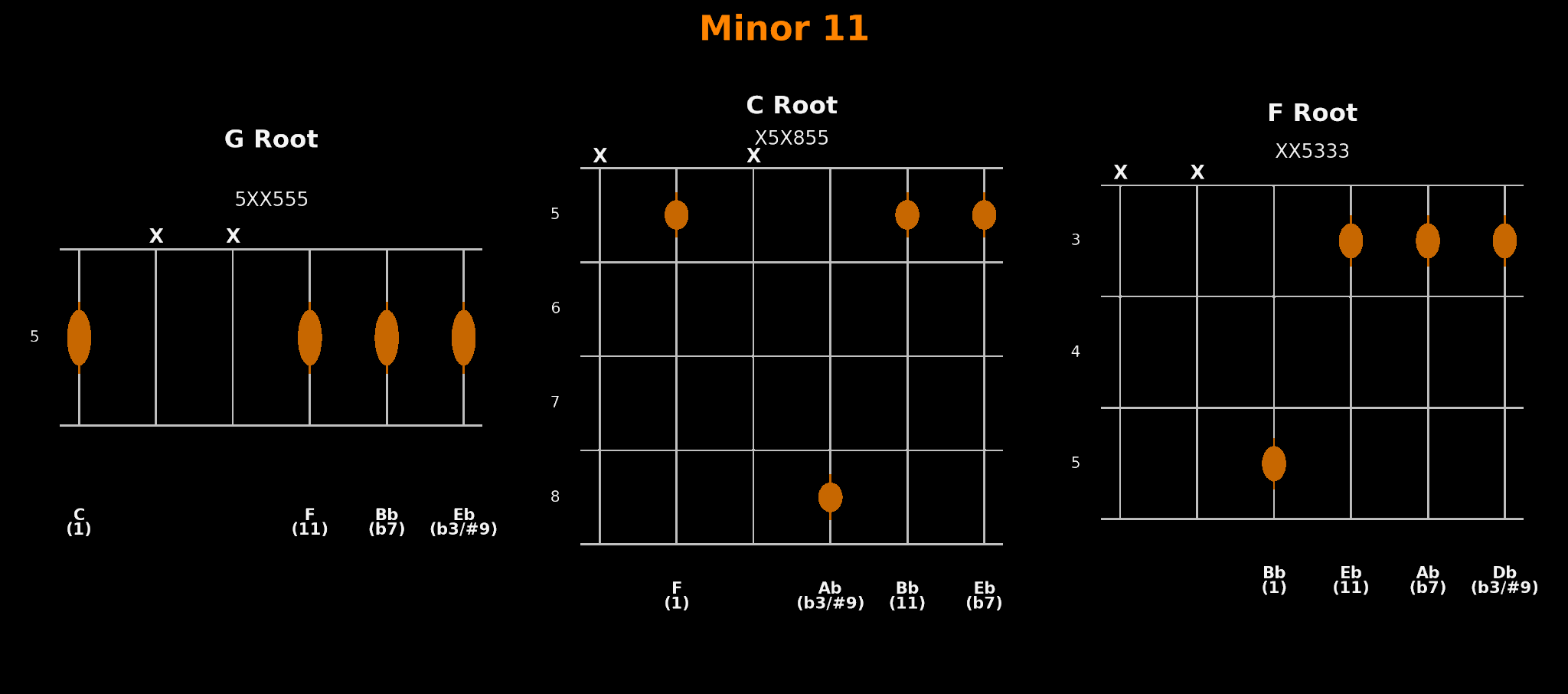
Minor 11
Dominant Family
Dominant voicings create tension and resolution. These are essential for jazz, blues, funk, turnarounds, and altered sounds.
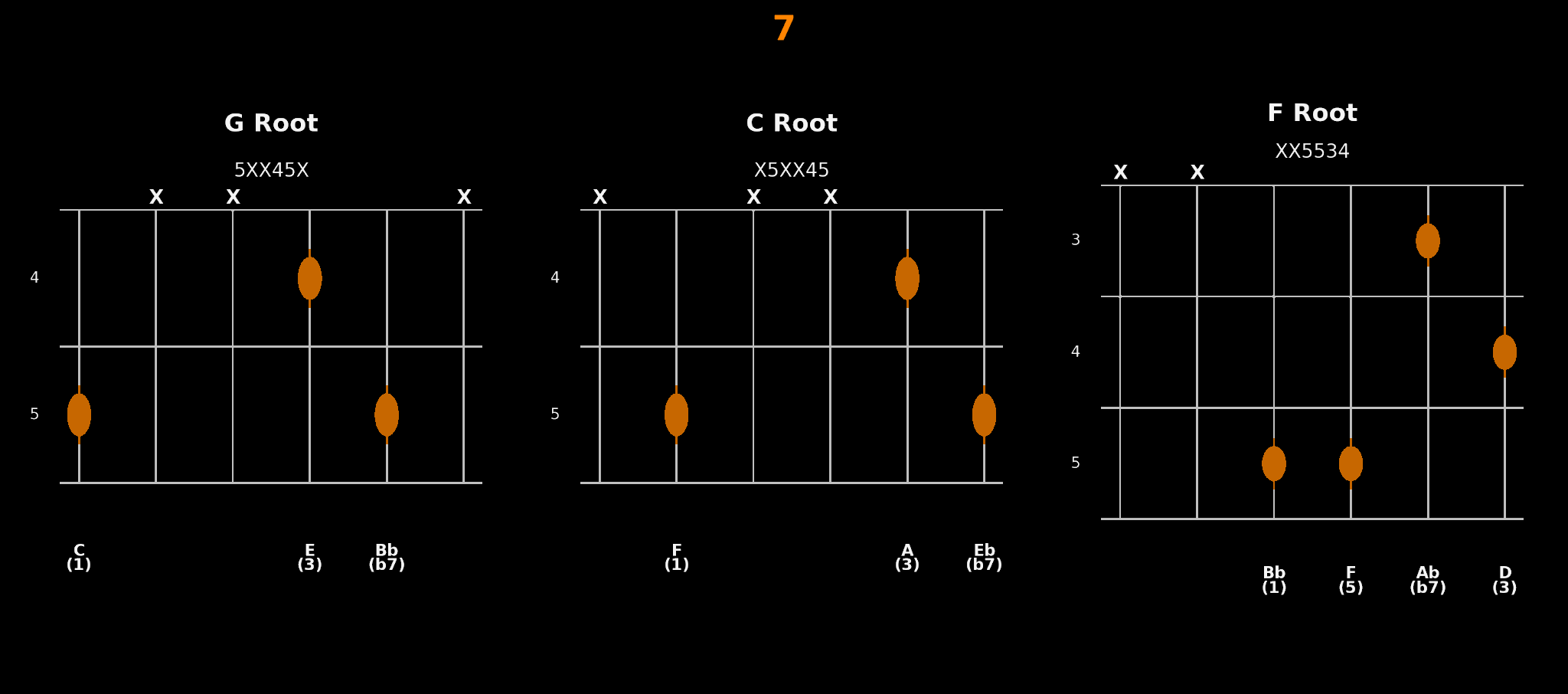
7
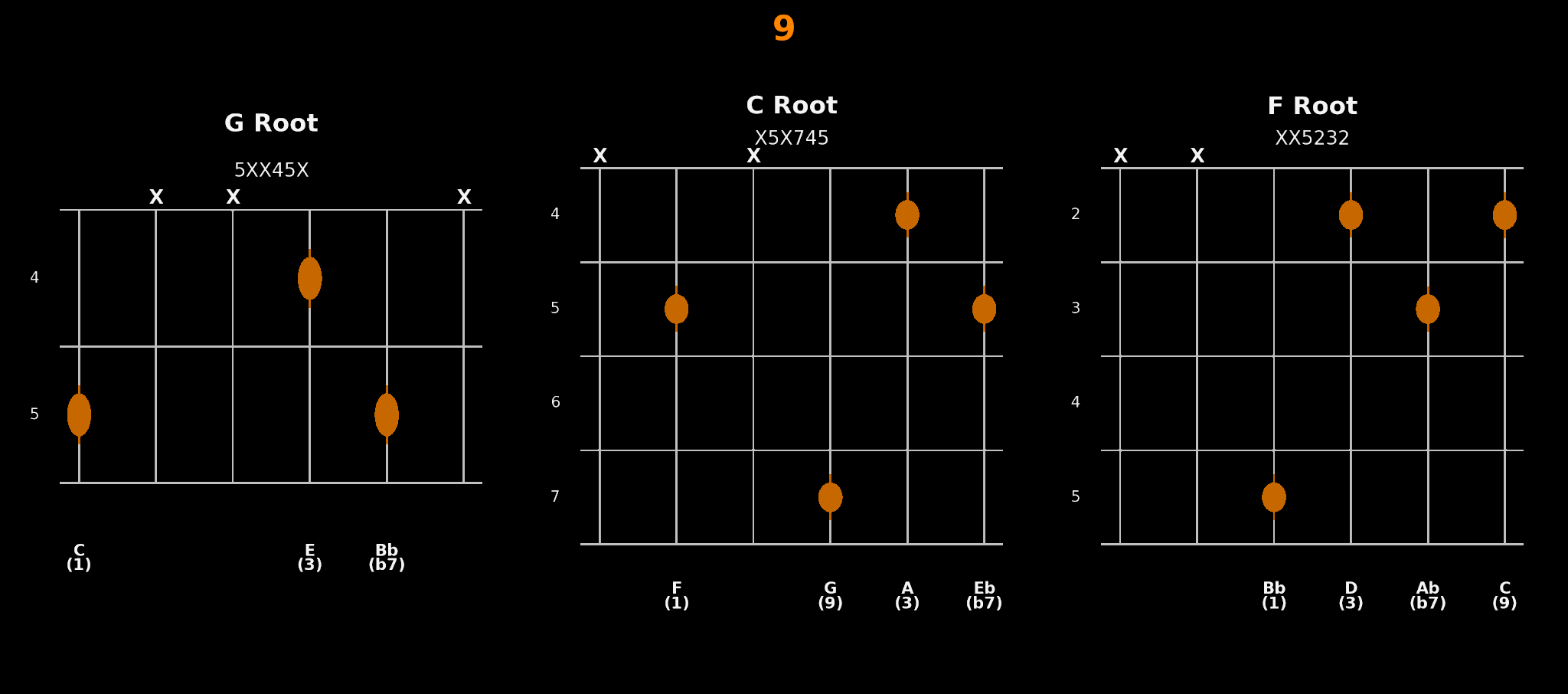
9
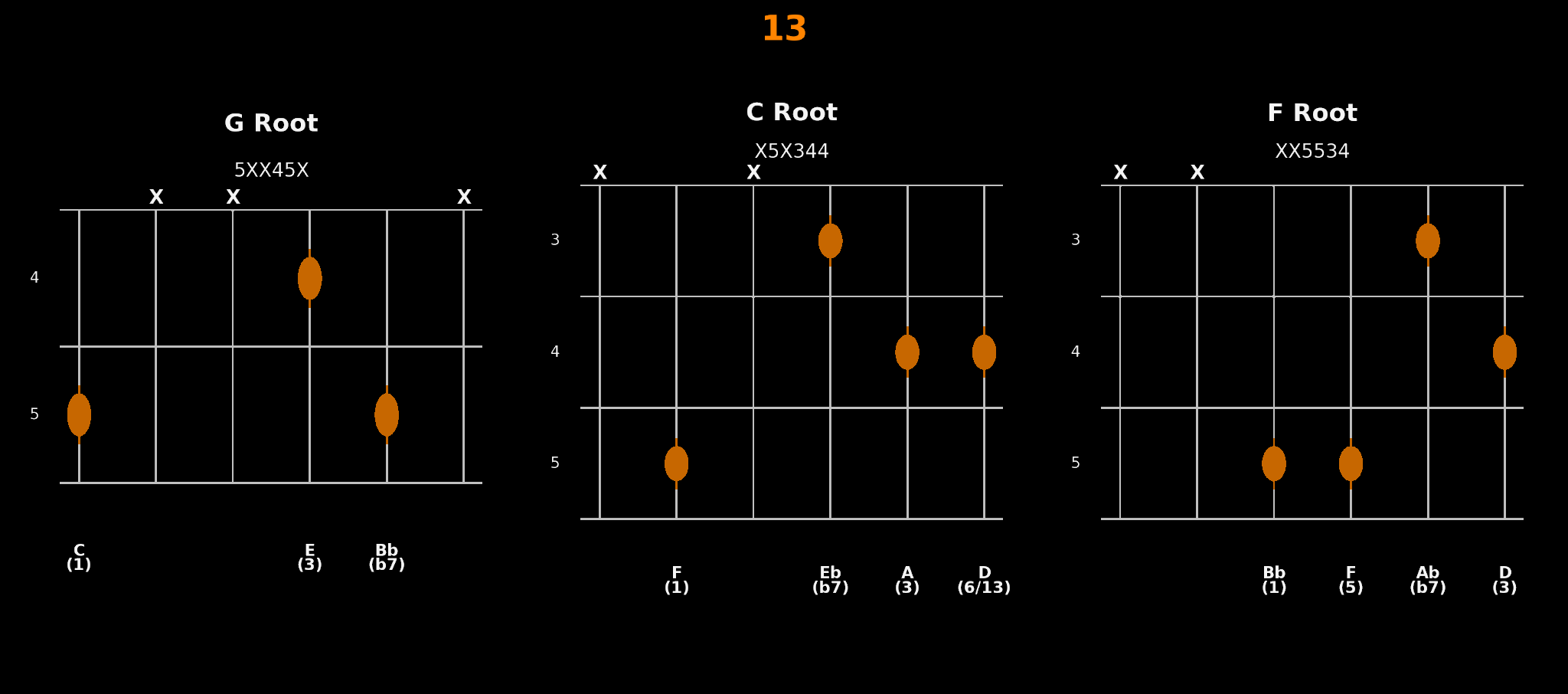
13
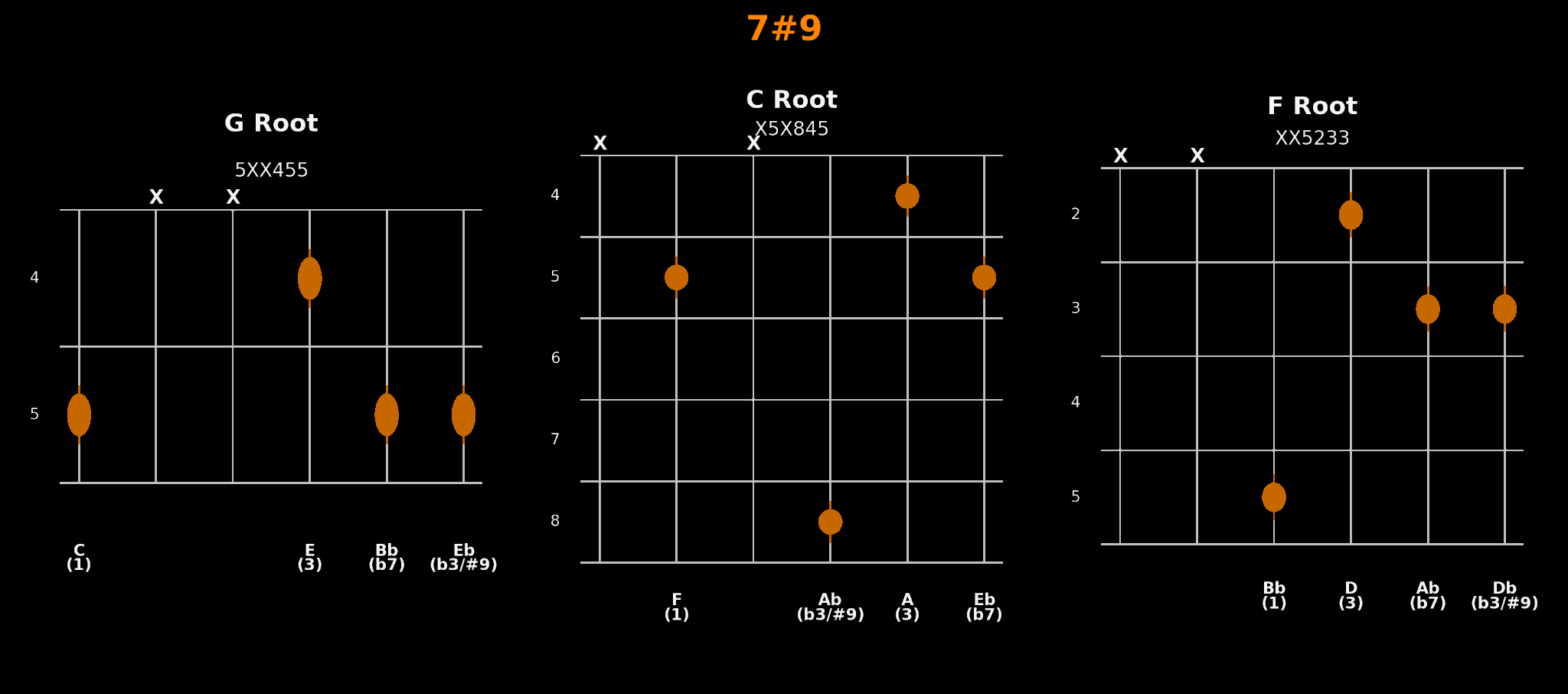
7#9
Diminished Family
Diminished and half-diminished sounds are useful for passing chords, substitutions, diminished movement, and altered harmony.
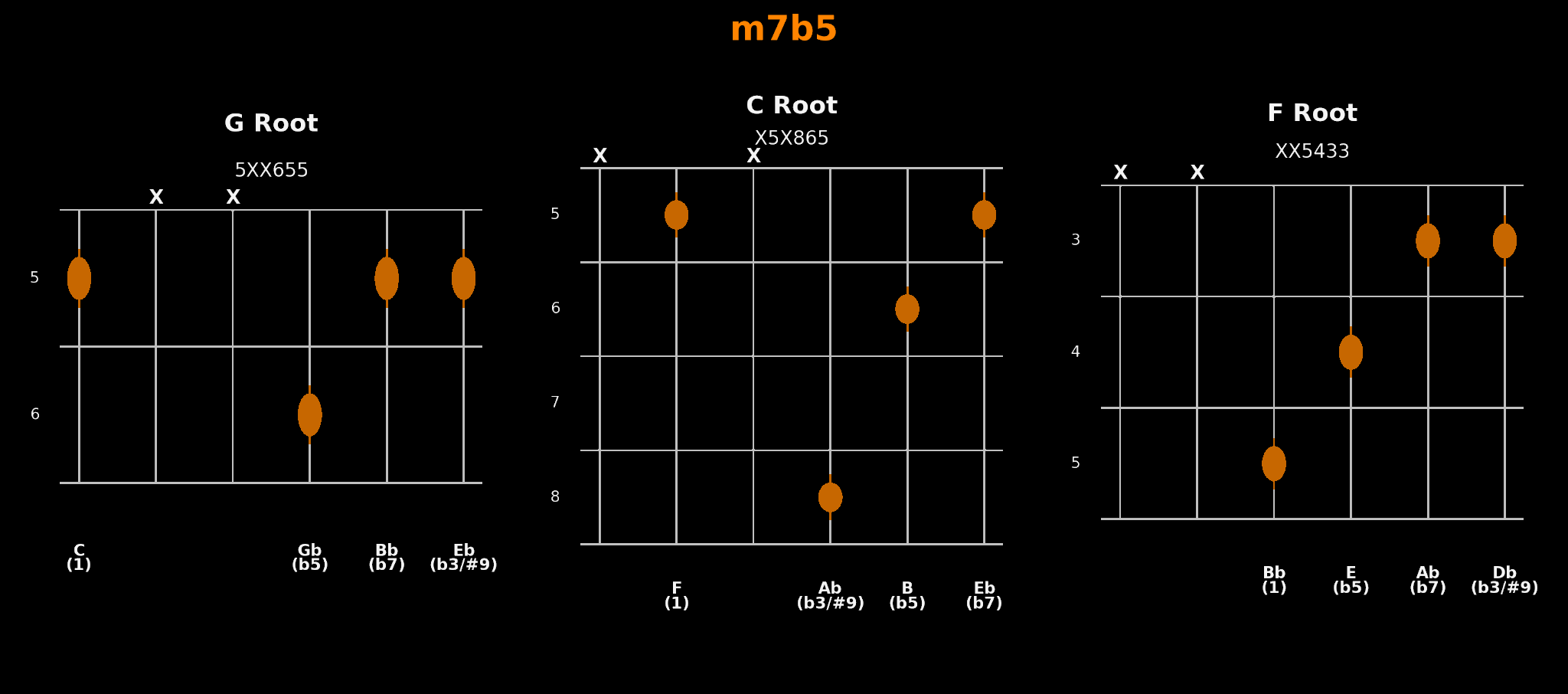
m7b5
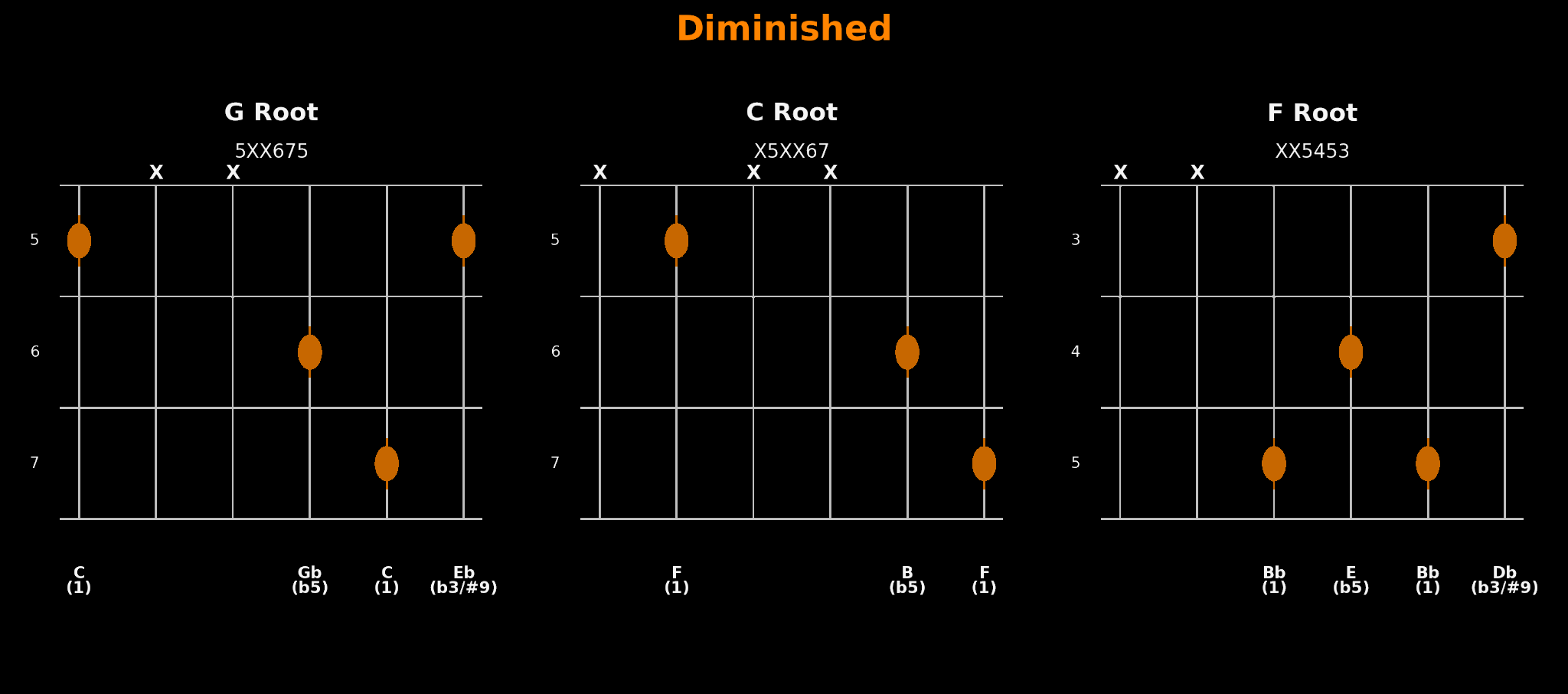
Diminished
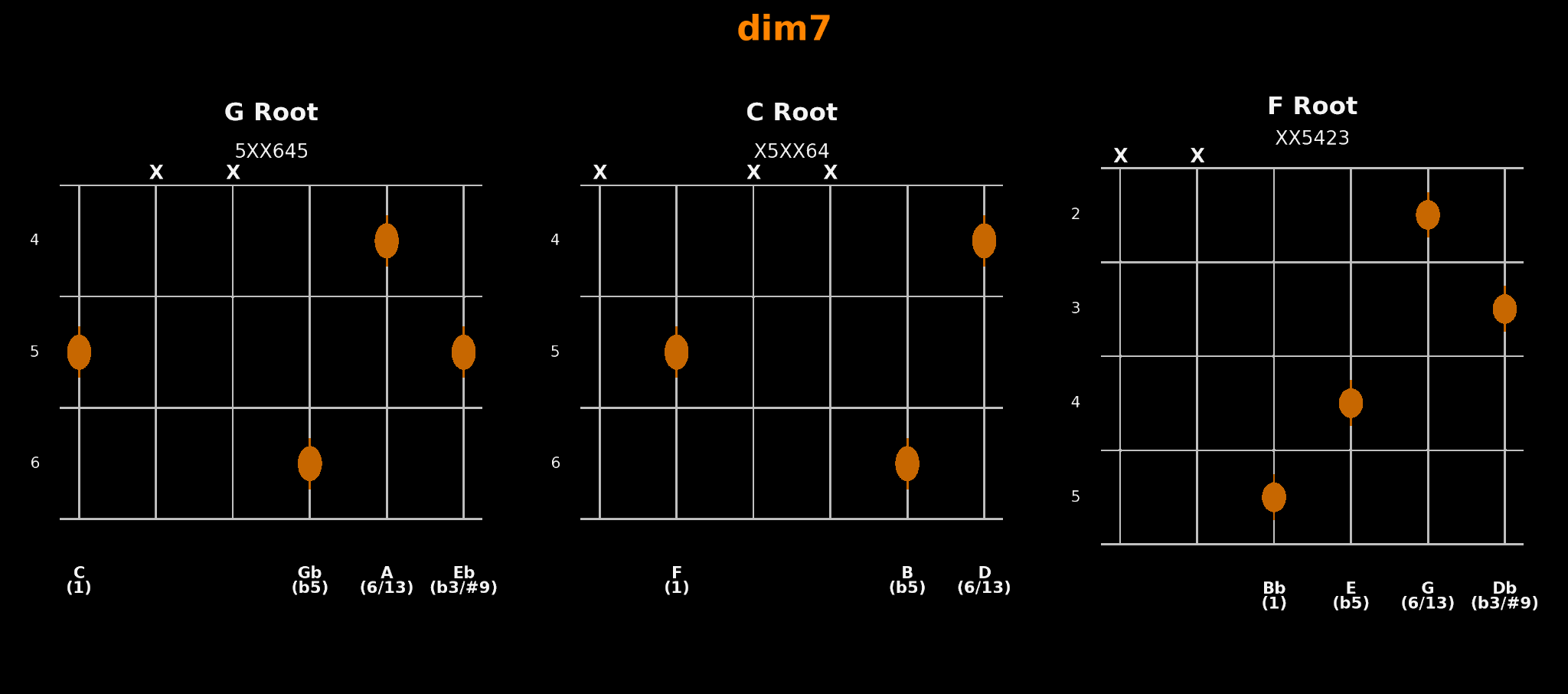
dim7
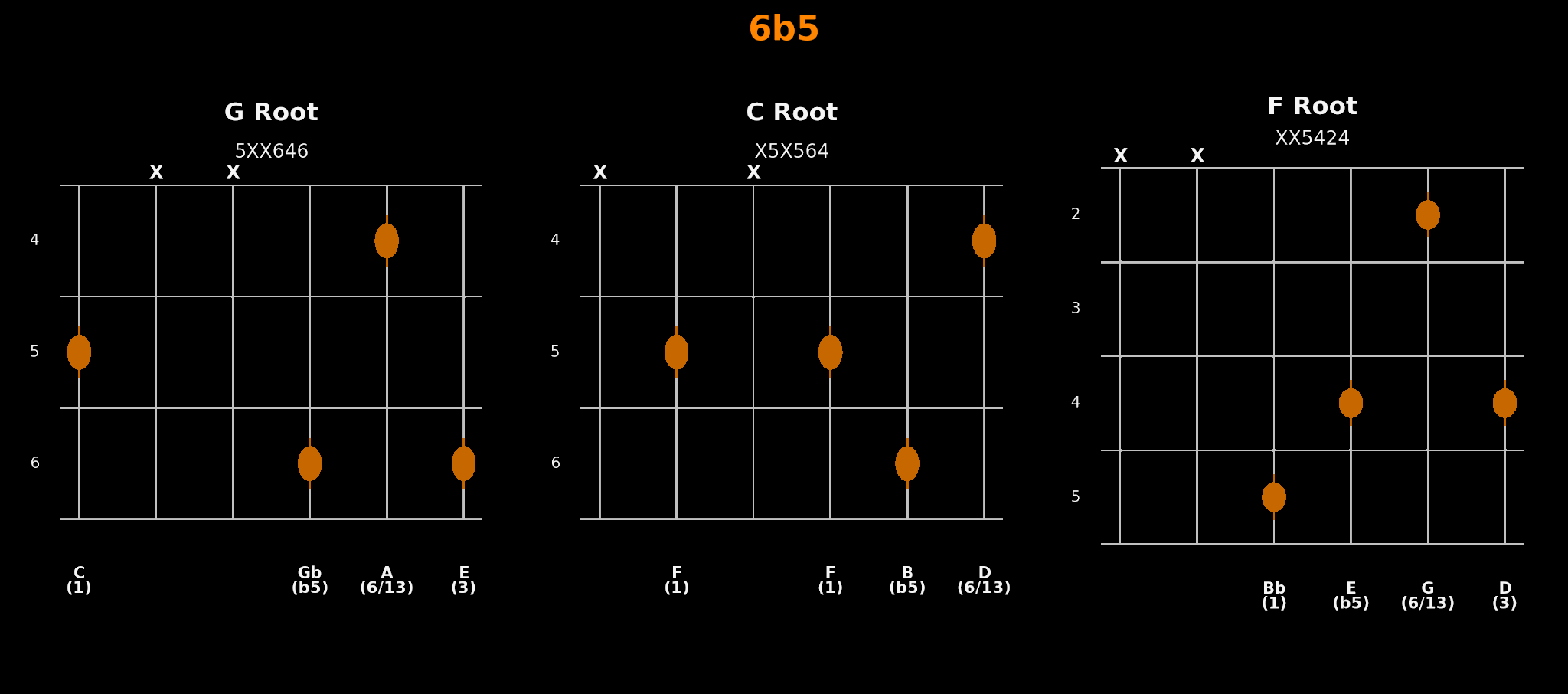
6b5
Resources:
Welcome to the DJHGB6 LIIBRARY.
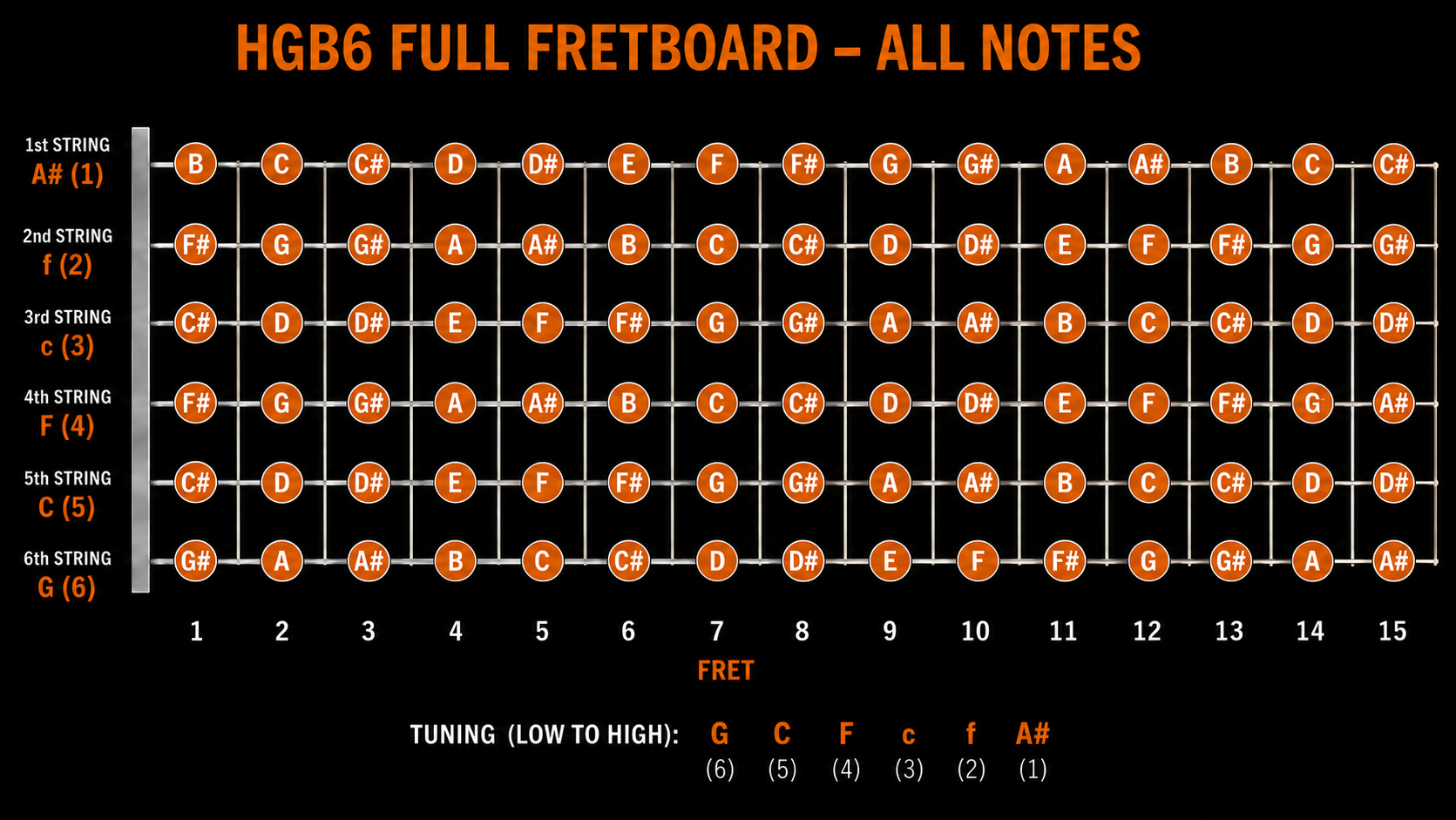
These chord diagrams are designed specifically for the Hybrid Guitar tuning:
Because the Hybrid Guitar is neither a traditional guitar nor a bass, familiar chord shapes do not always transfer directly. The instrument creates unique opportunities for chord voicings, compact fingerings, and musical textures that are difficult to achieve on other instruments.
The goal of this database is to document practical, movable chord shapes that sound great, feel natural under the fingers, and can be applied immediately in real musical situations.
Whether you’re exploring the instrument for the first time or expanding your existing vocabulary, these diagrams provide a foundation for understanding how harmony works on the Hybrid Guitar.
One of the most important concepts in the Dragon Jamz Hybrid Guitar system is understanding where the root note is located.
The Dragon Jamz HGB6 chord shapes are grouped by the string that contains the root note. This approach makes it easier to learn chord families, recognize patterns, and quickly transpose shapes to new keys.
Throughout this database, chord voicings are grouped into three primary root locations:
G-String Root Shapes
These voicings place the root note on the lowest string of the instrument (G string).
G-string root shapes often provide the strongest bass foundation and are useful when playing solo arrangements, groove-based music, or situations where a clear root note is needed in the lower register.
C-String Root Shapes
These voicings place the root note on the C string.
C-string root shapes typically offer a balanced sound with a strong bass presence while allowing for compact upper chord voicings. Many players find this position particularly useful for accompaniment and rhythm playing.
F-String Root Shapes
These voicings place the root note on the F string.
F-string root shapes often create the most compact chord forms available on the Hybrid Guitar. Because the root sits closer to the center of the instrument, these voicings can produce rich harmonic textures while remaining comfortable to play.
A major advantage of the Hybrid Guitar is that the same chord quality can often be played from several different root positions.
For example, a major chord may have a G-string root version, a C-string root version, and an F-string root version. While each shape functions as the same chord, the voicing, tonal color, and playability can be quite different.
Learning multiple root locations allows you to:
- Play the same chord in different areas of the neck
- Create smoother chord transitions
- Build more interesting arrangements
- Choose voicings that best fit the musical context
- Develop a deeper understanding of the fretboard
As you explore the chord database, pay attention to the root-string location of each shape. Over time, these patterns become one of the most powerful tools for navigating the Hybrid Guitar.
The Dragon Jamz HGB6 shapes were designed around playability, efficiency, and musical usefulness.
Design Principles
Compact Fingerings
Most chord shapes are kept within a two- to four-fret span whenever possible, making them comfortable to play and easy to move around the neck.
Movable Root Positions
Chord families are organized around root notes found on the G, C, and F strings. Once a shape is learned, it can often be moved to other keys by shifting the root location.
Practical Voicings
The focus is on chords that sound good in real musical situations rather than theoretical completeness. Some voicings intentionally omit the fifth or double certain notes to improve tone, balance, and playability.
Consistent Organization
Chords are grouped by root-string location and chord family, making it easier to recognize patterns and build a practical harmonic vocabulary.
Built for Real Music
Every shape in this collection is intended to be useful for songwriting, accompaniment, improvisation, arranging, and performance.
The Hybrid Guitar is a unique instrument with its own strengths and logic. These chord shapes represent an ongoing effort to document that system and make it accessible to other musicians.